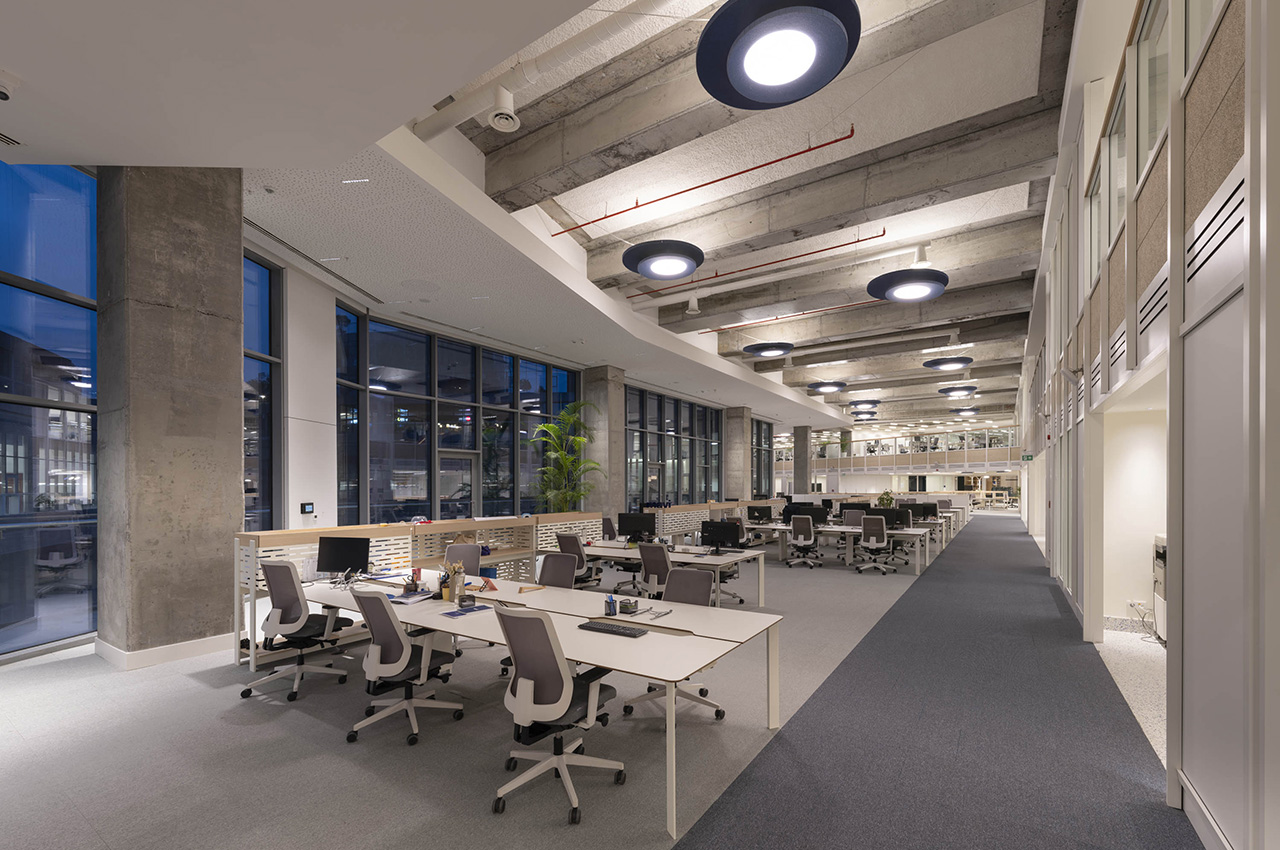
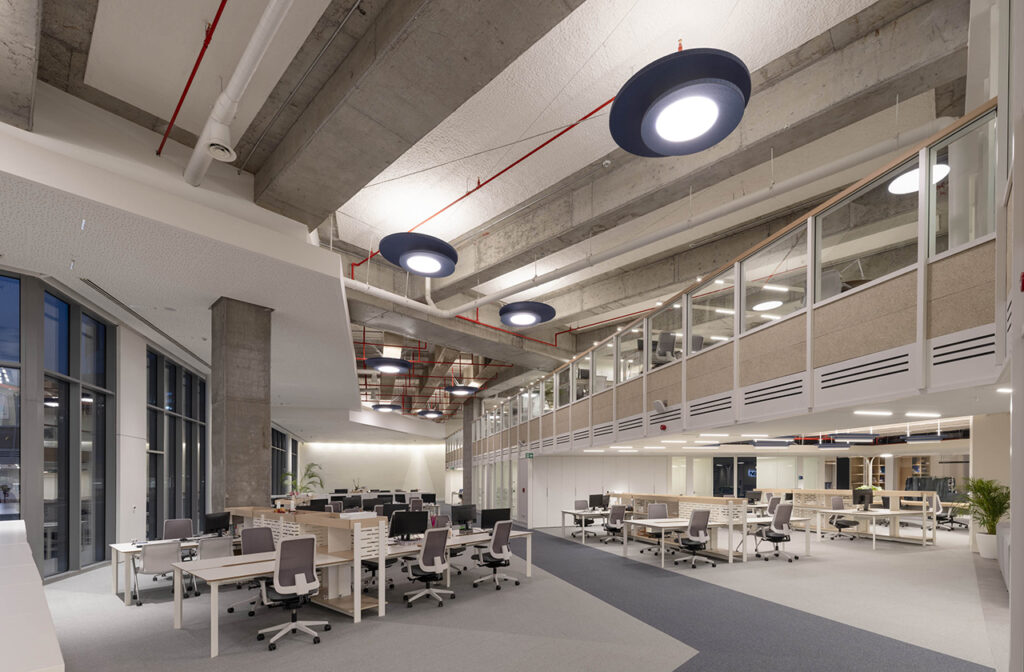
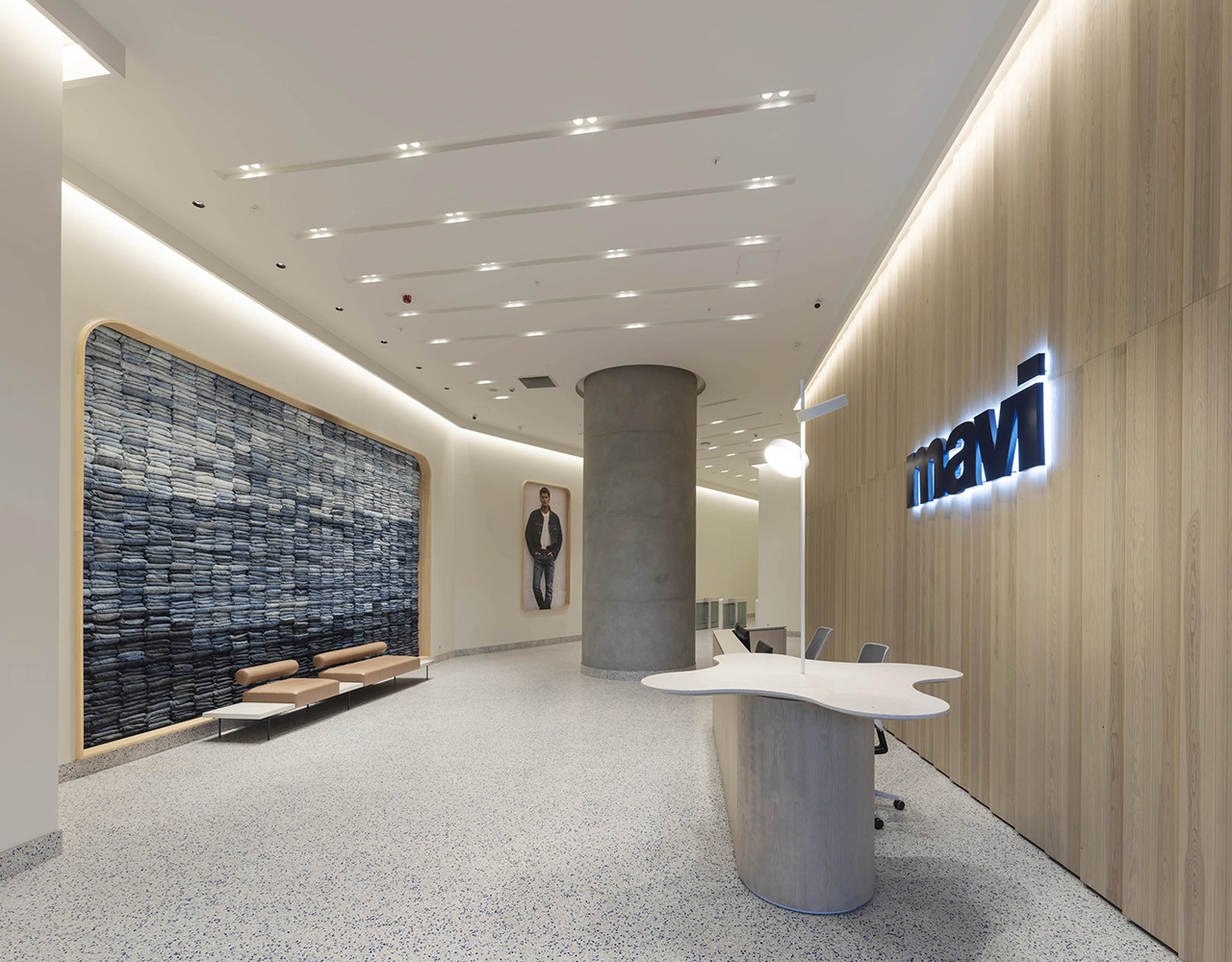
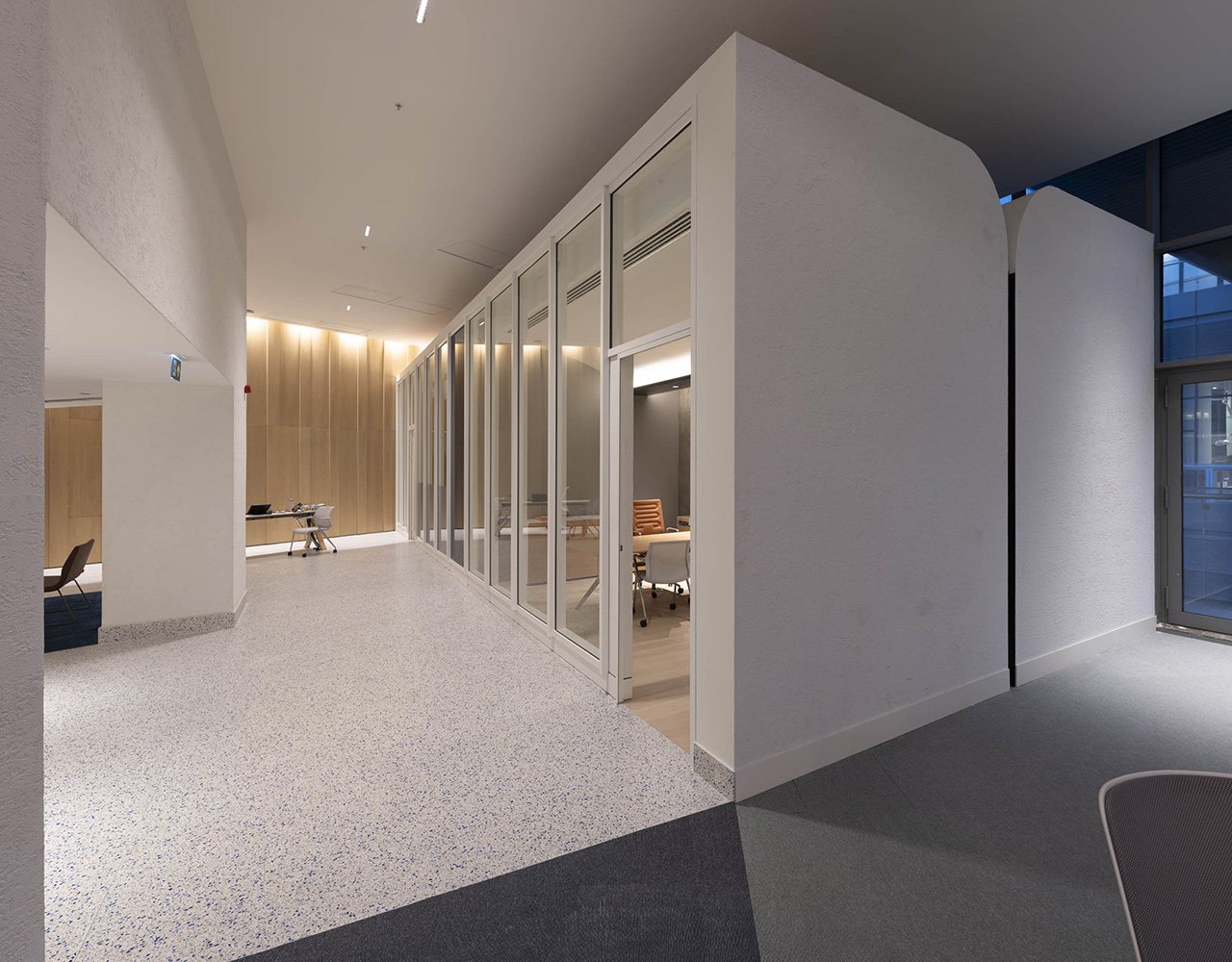
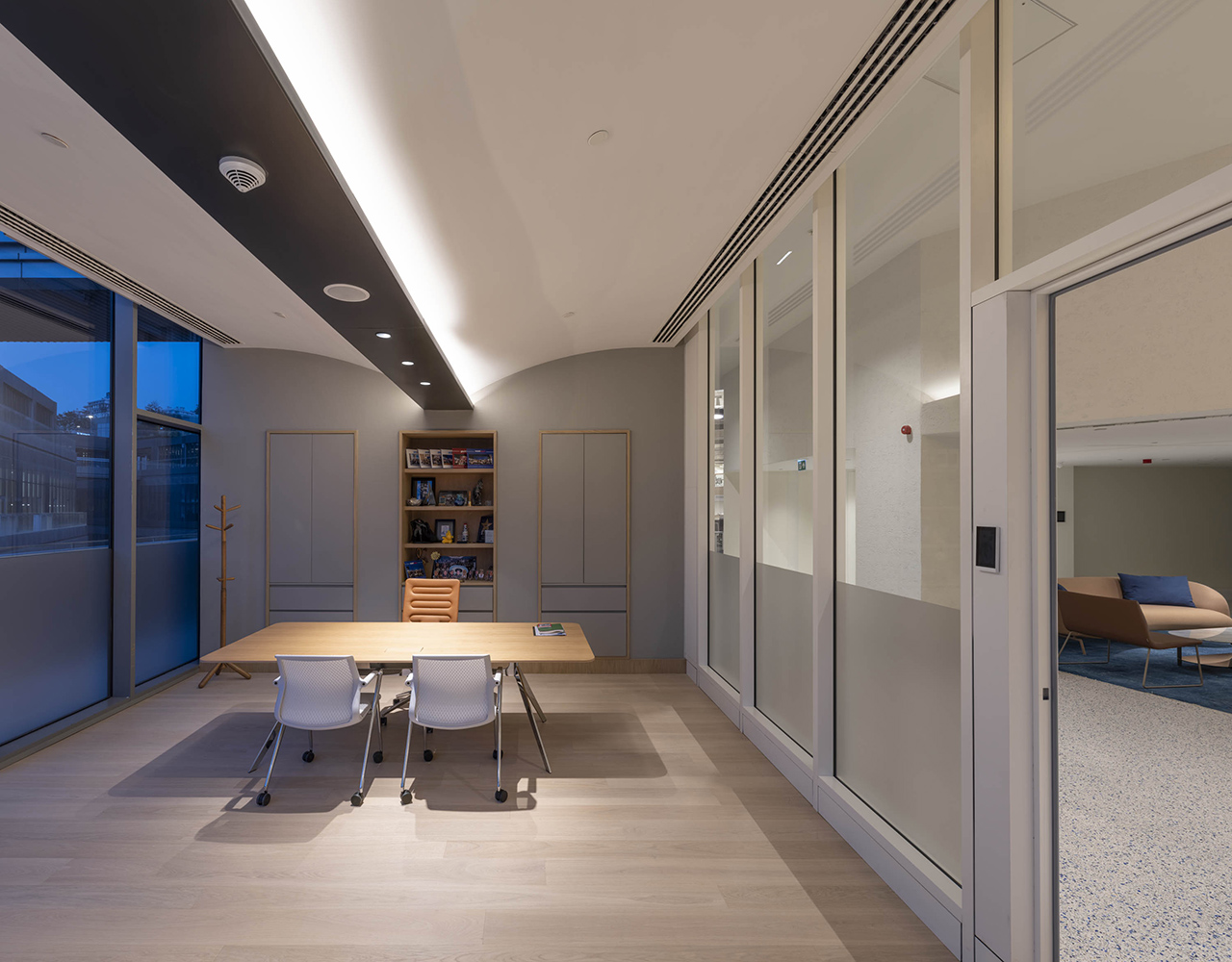
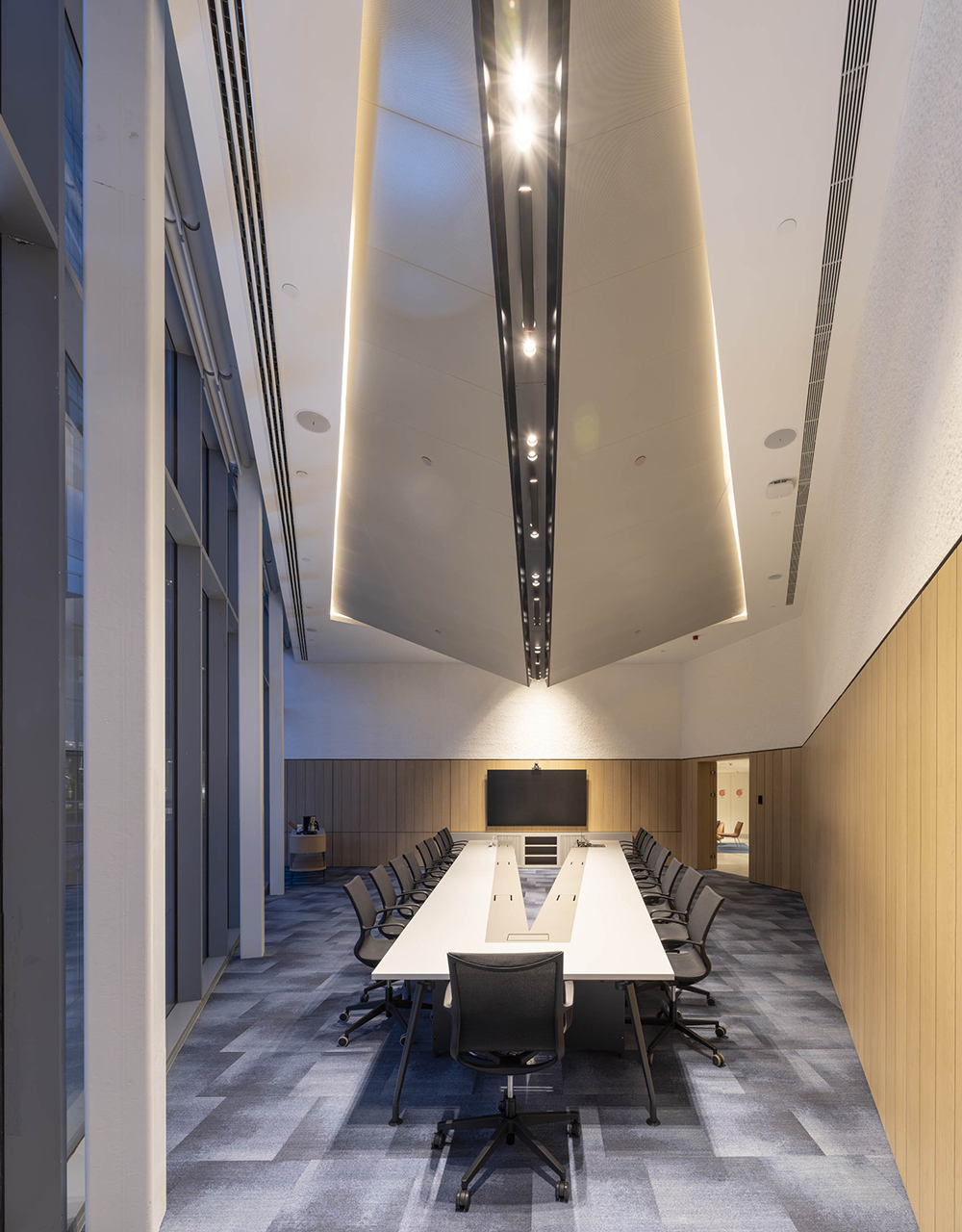
As a result of the growing number of employees in recent years and evolving expectations regarding workplace comfort, it was decided to relocate the office to a new space capable of meeting contemporary requirements. Designed in line with Mavi’s corporate identity and guided by an industrial design approach, the office was conceived as a refined, timeless, and highly functional work environment. The design aimed to reflect the brand’s spirit through a simple material palette and spatial composition that provides a strong backdrop for daily operations.
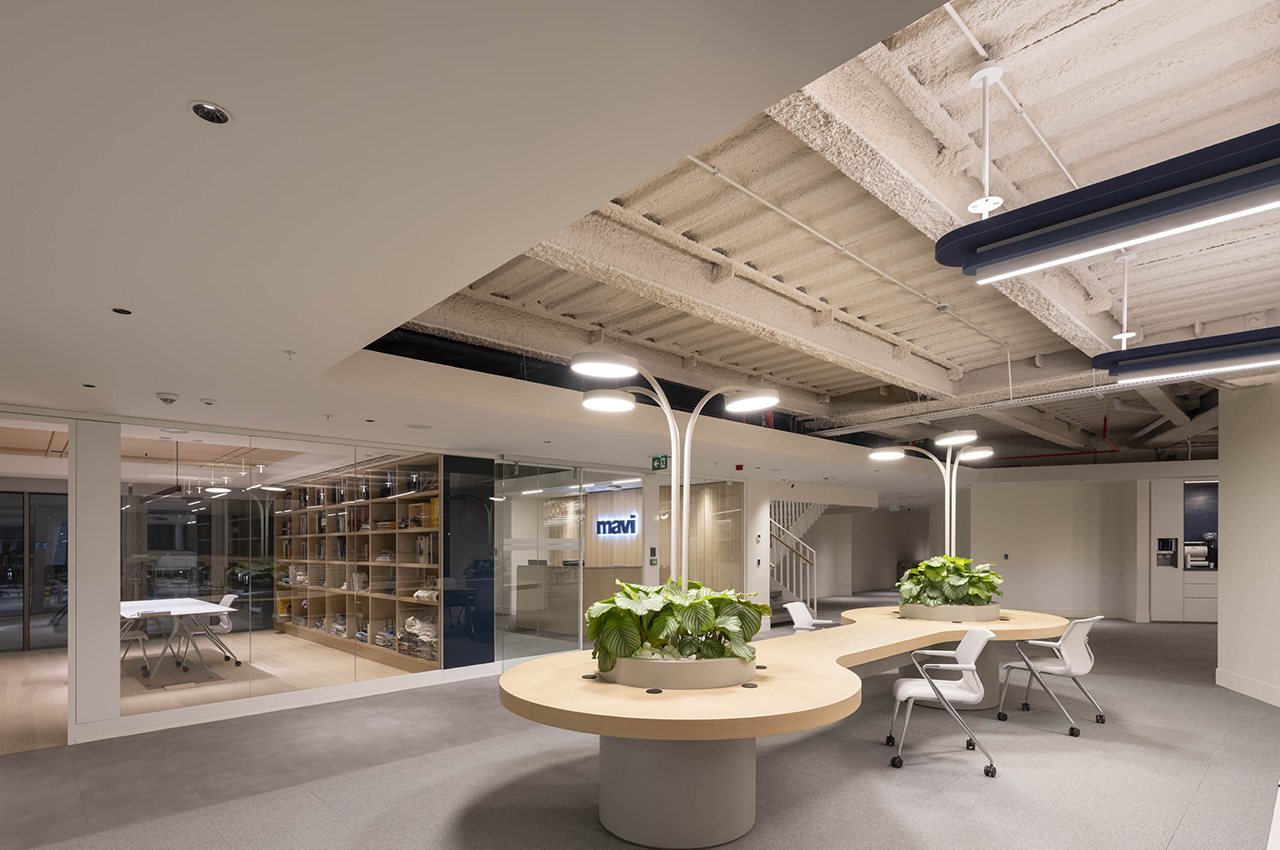
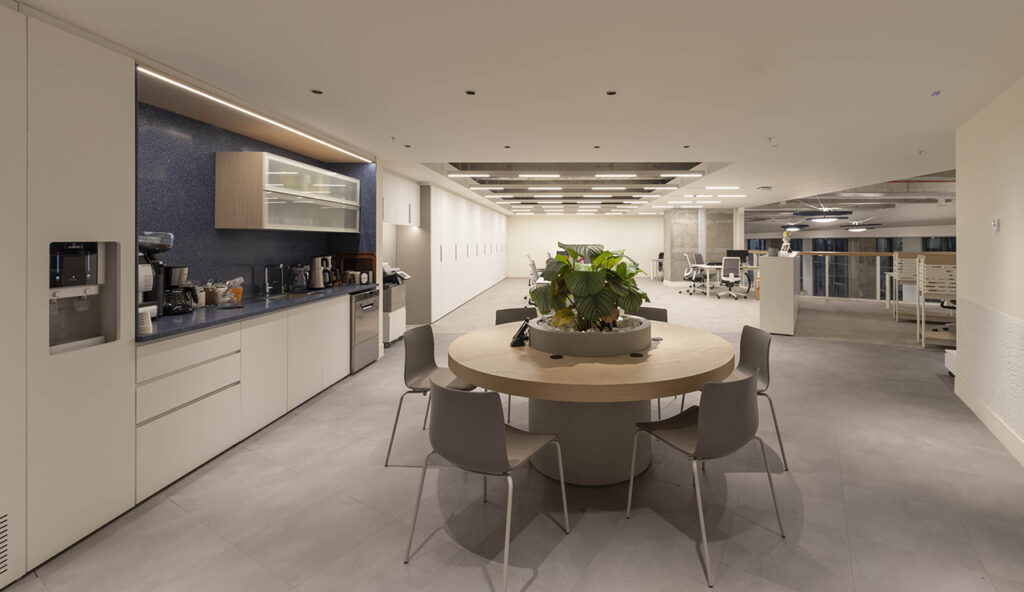
Denim-inspired details, emphasizing the company’s identity, were incorporated throughout the design in various ways, including the entrance lobby, sliding folding panels, curtains, social spaces, and the façades of executive offices. References to the company’s “Mavi-terranean” concept were further expressed through the selection of colors and textures, the use of plants, lighting design, and graphic elements.
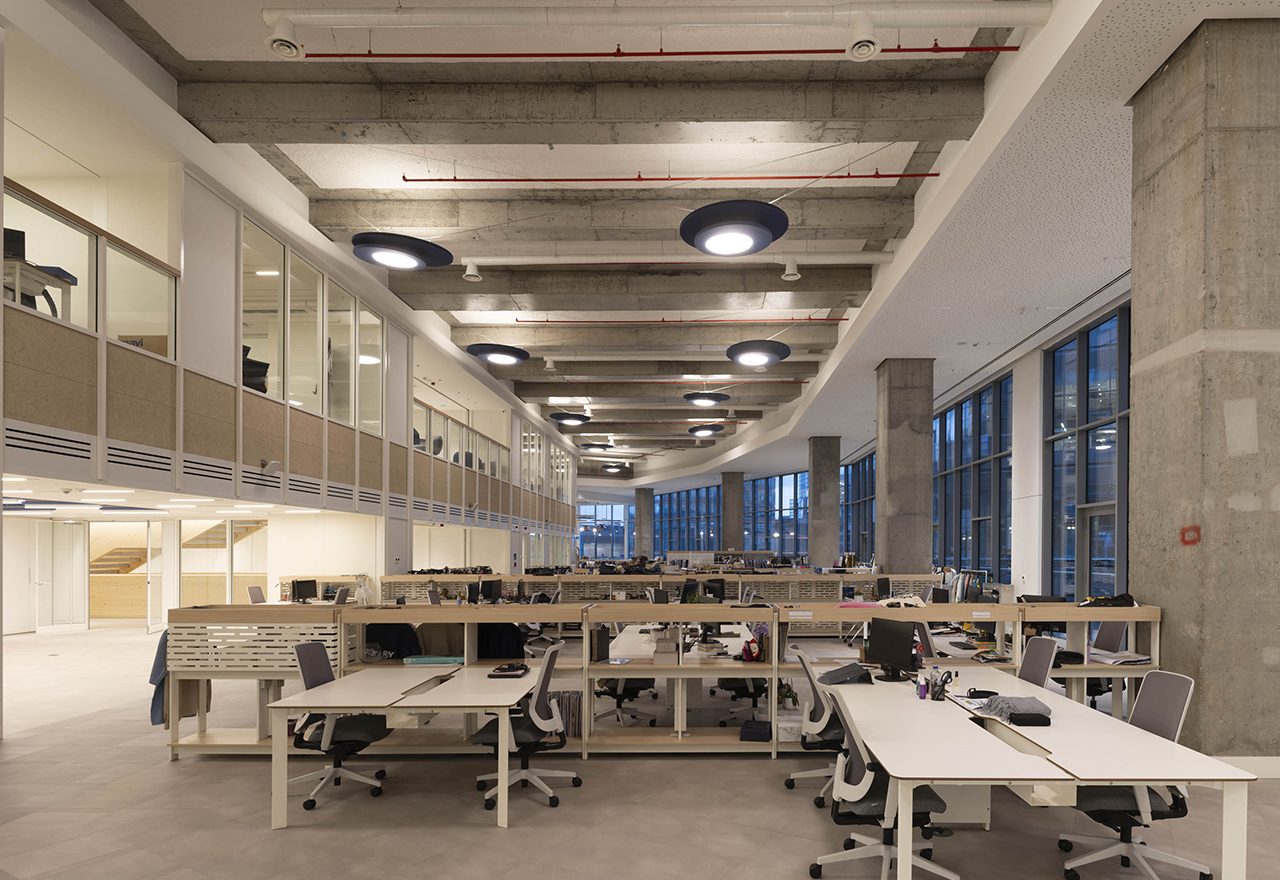
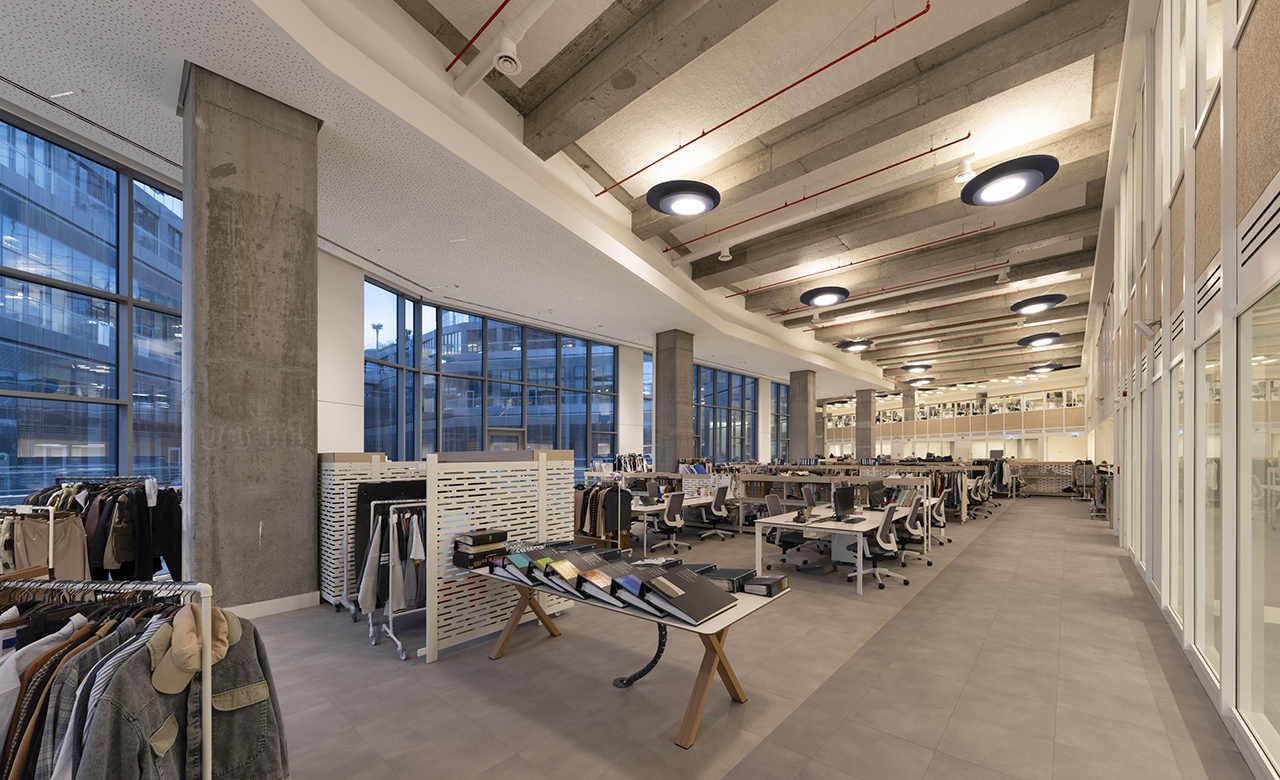
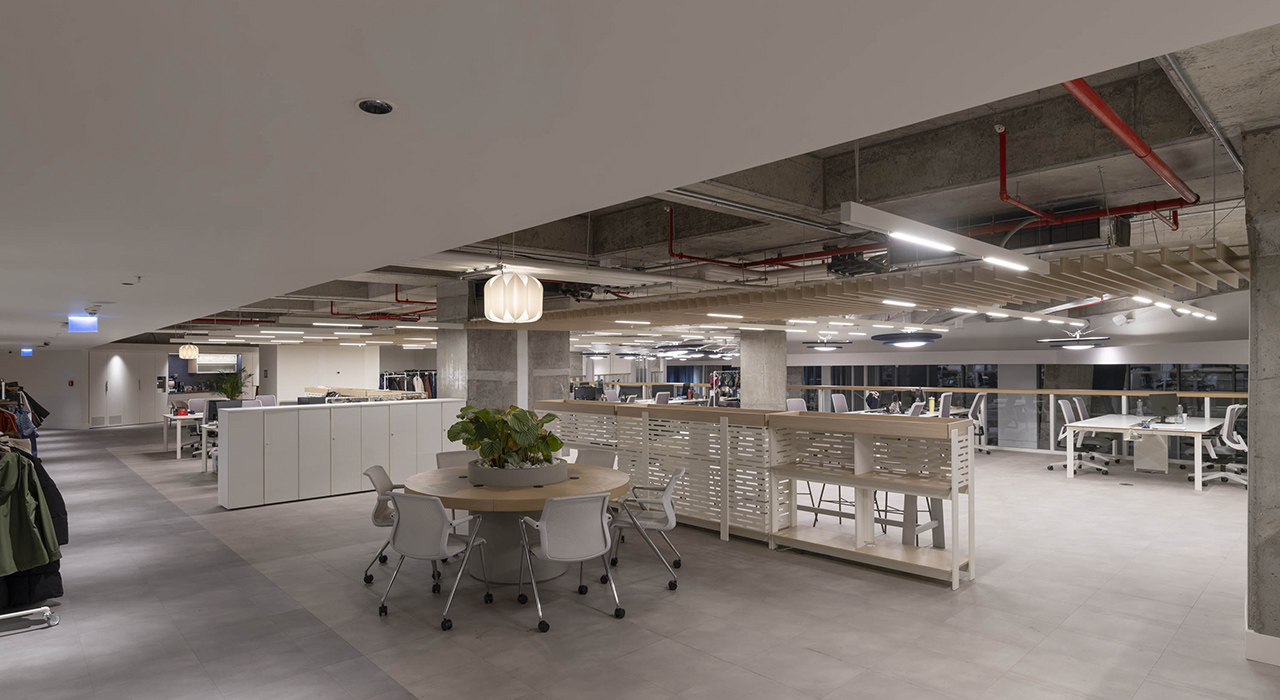
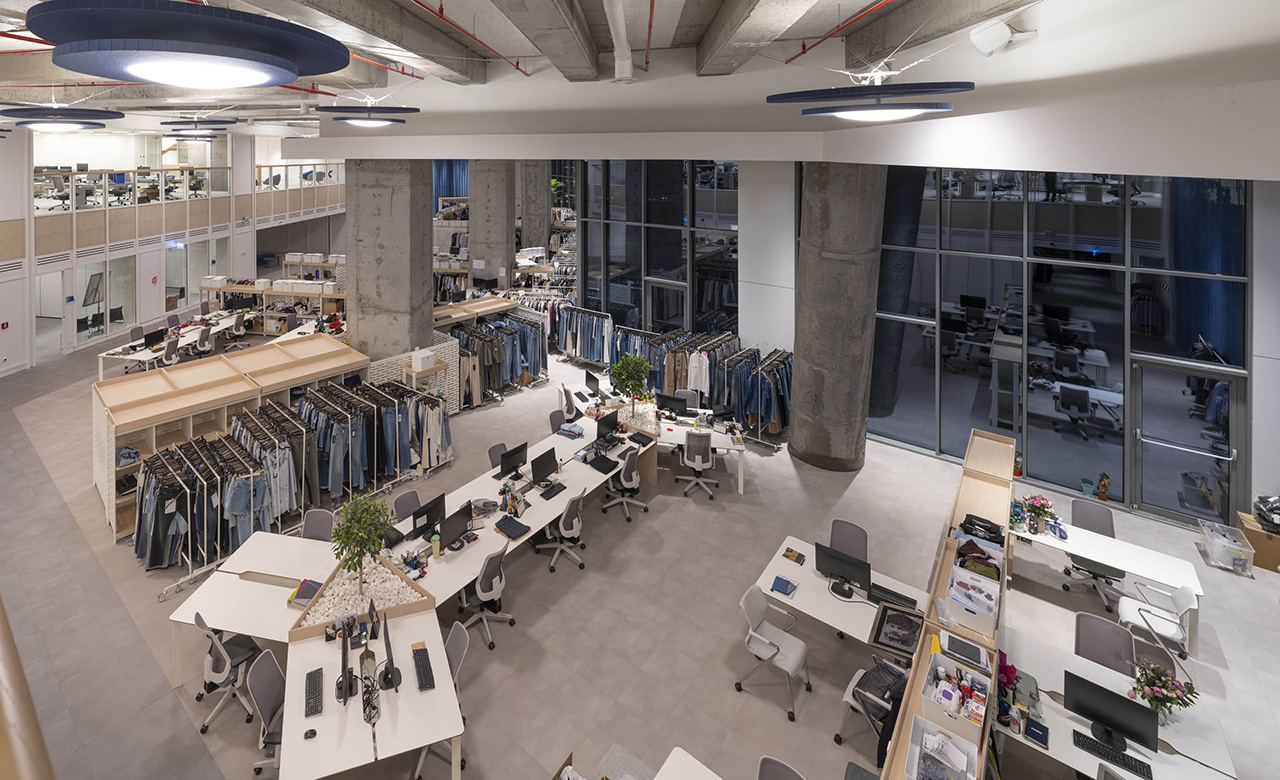
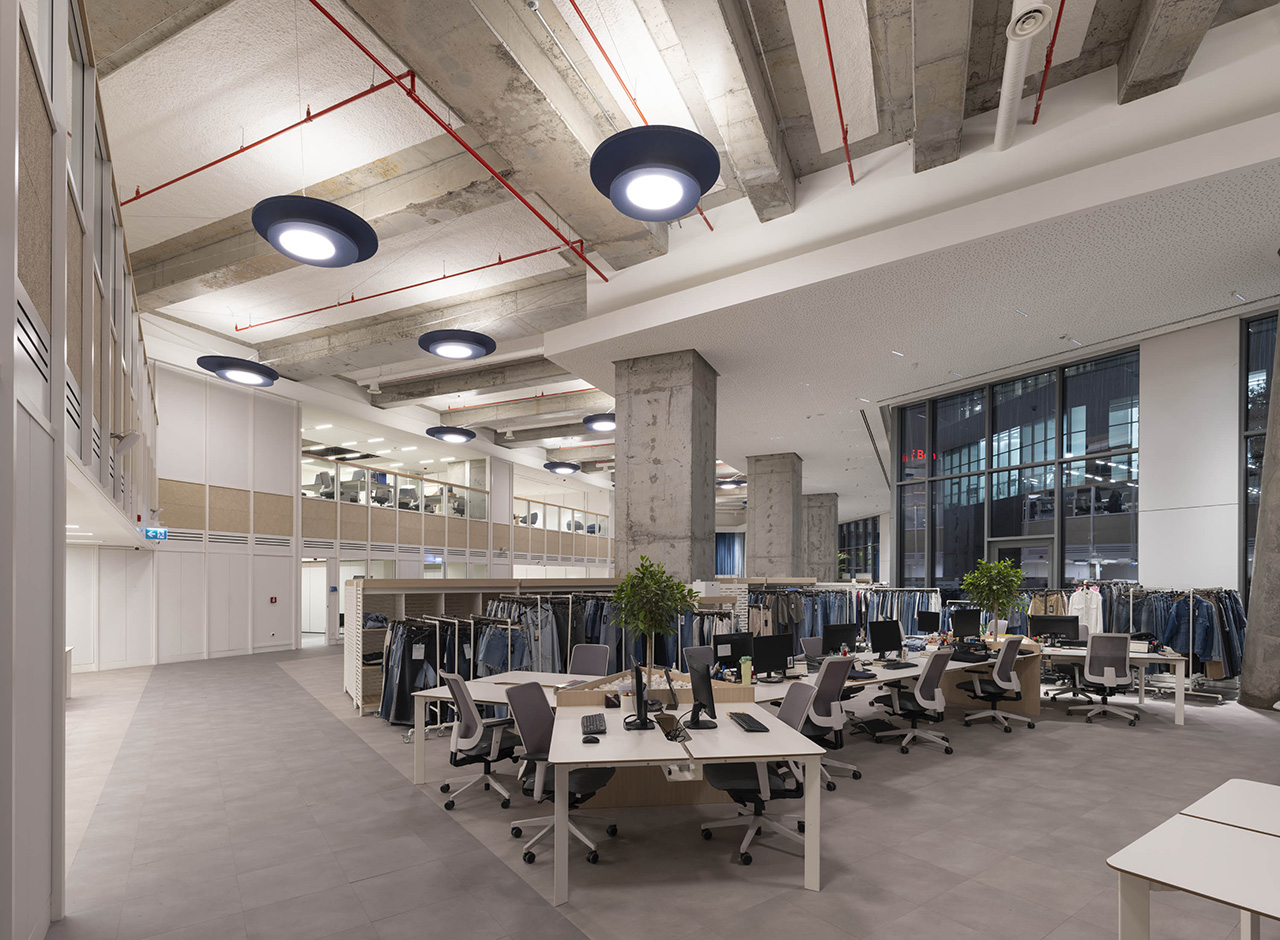
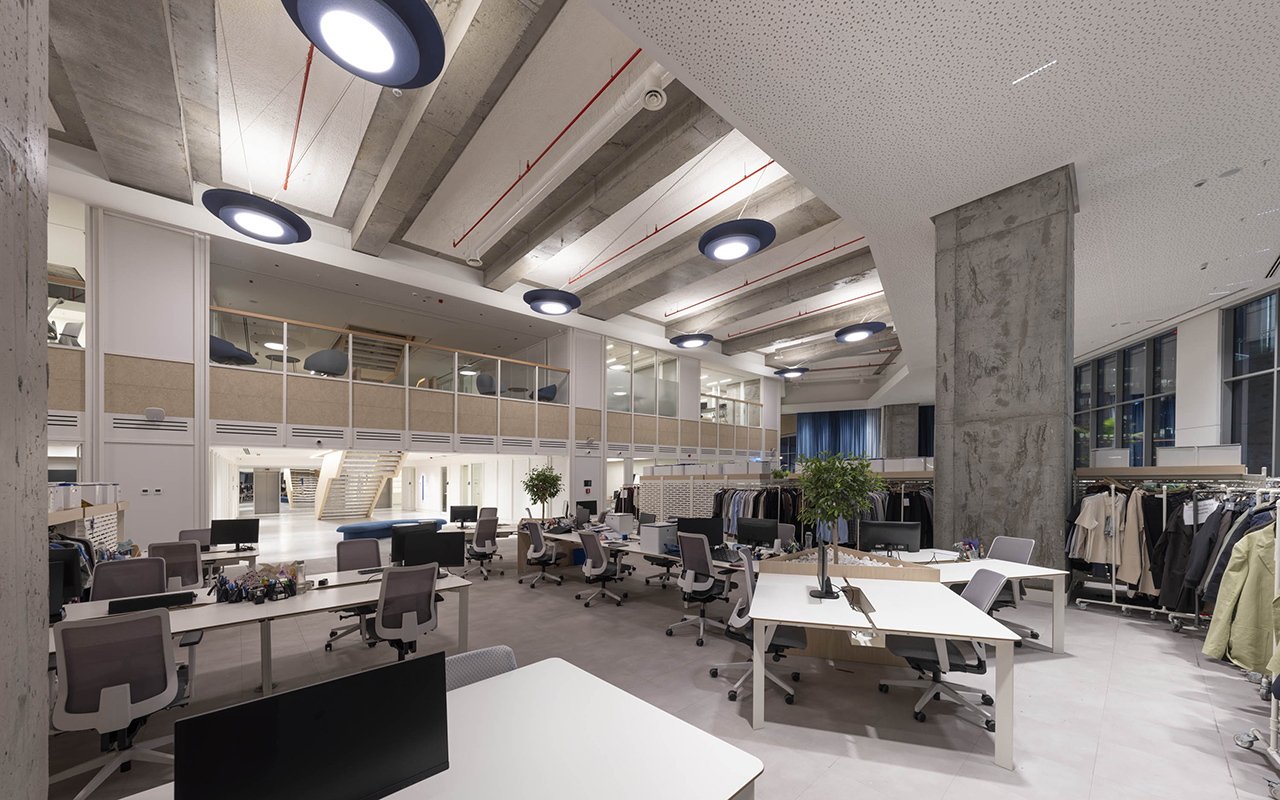
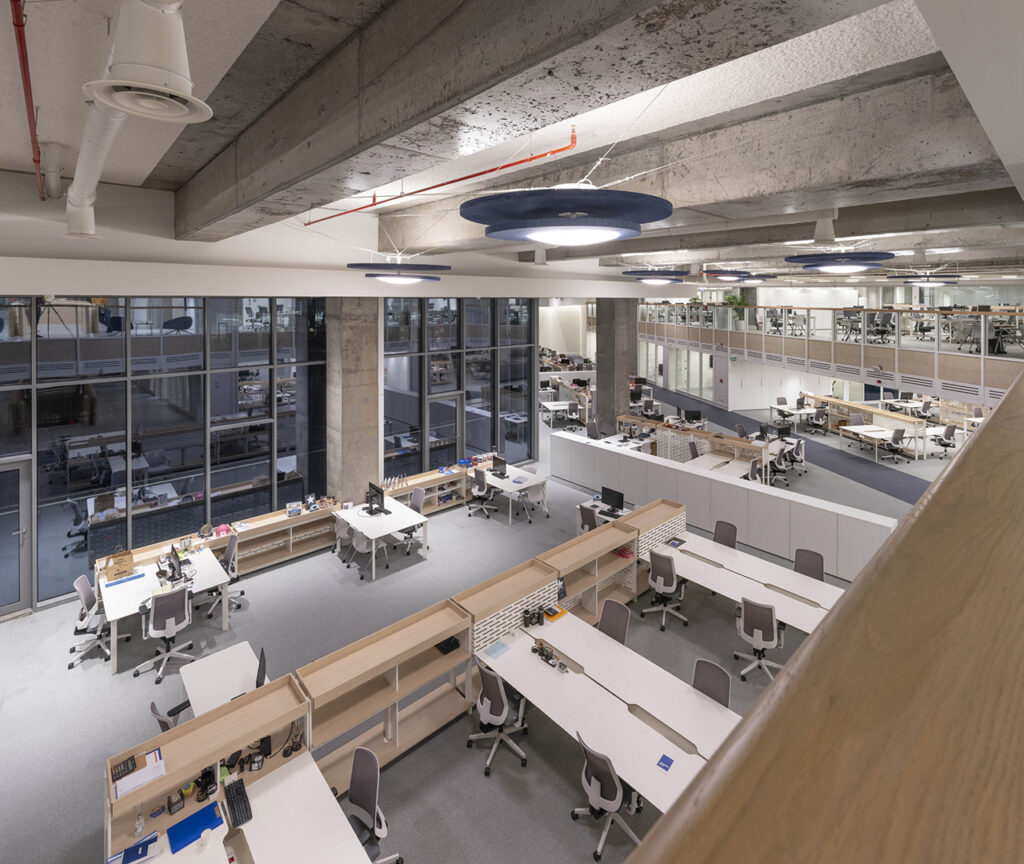
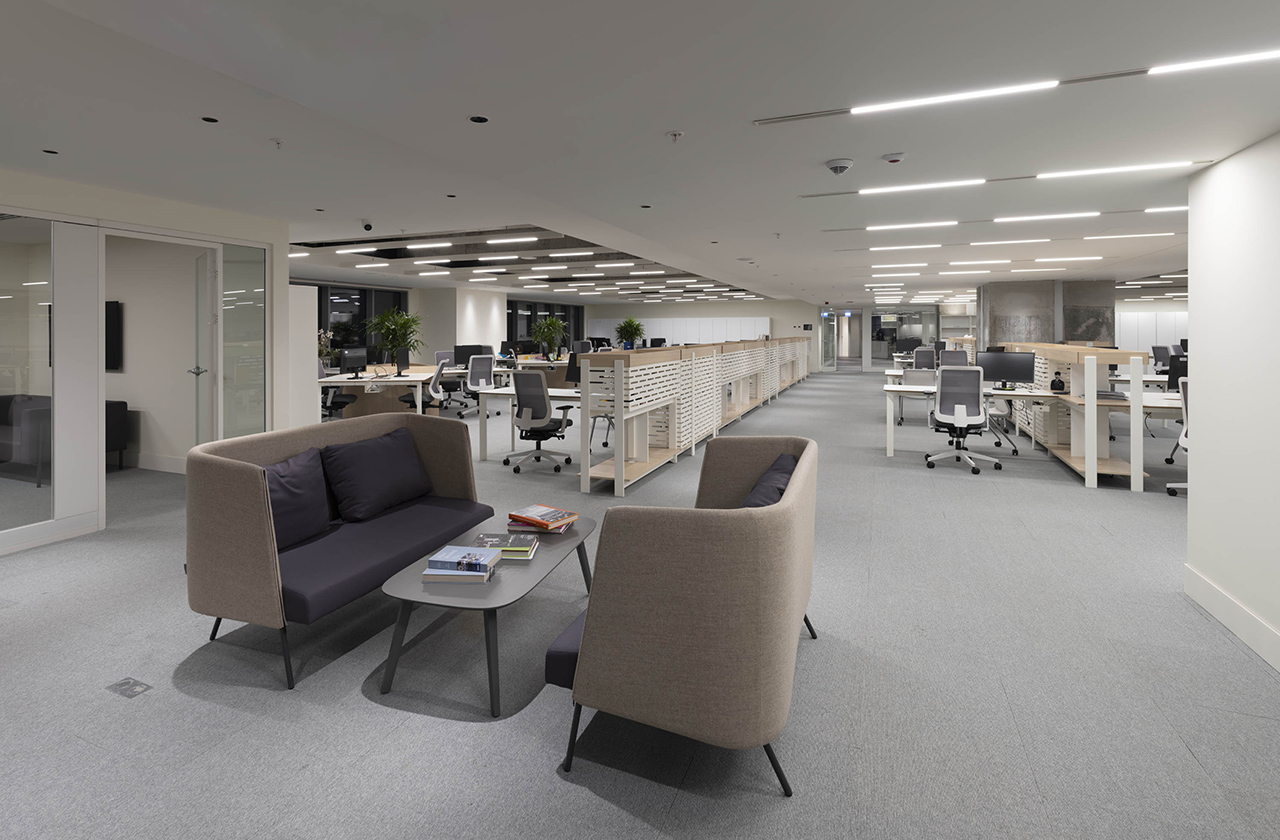
During the design process for the workspaces, the working, storage, and product-transfer needs of different employee groups were analyzed, with the goal of creating efficient work environments and appropriate storage solutions. In response, integrated desk storage systems were developed, while units capable of storing movable hanging racks were positioned between workstations.
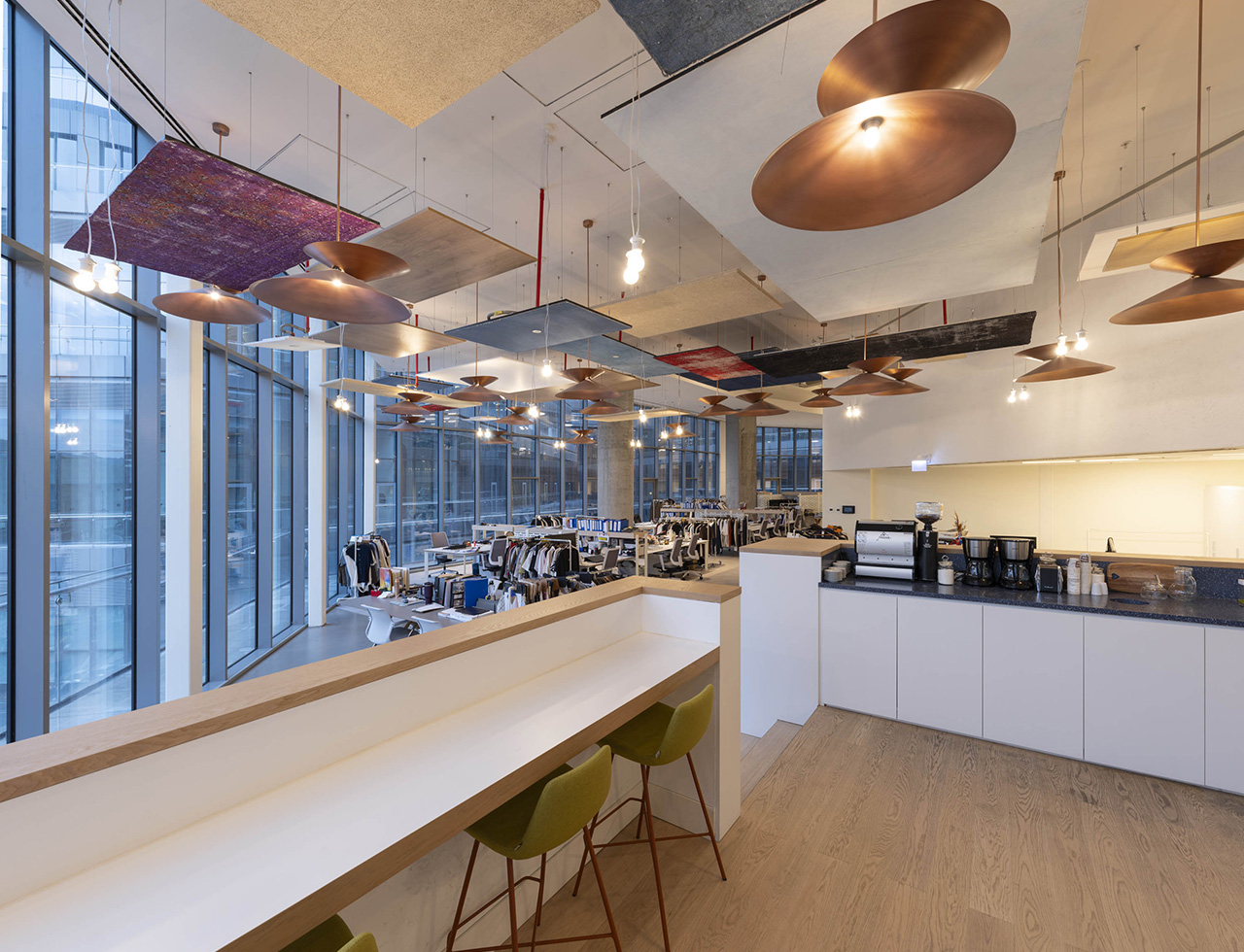
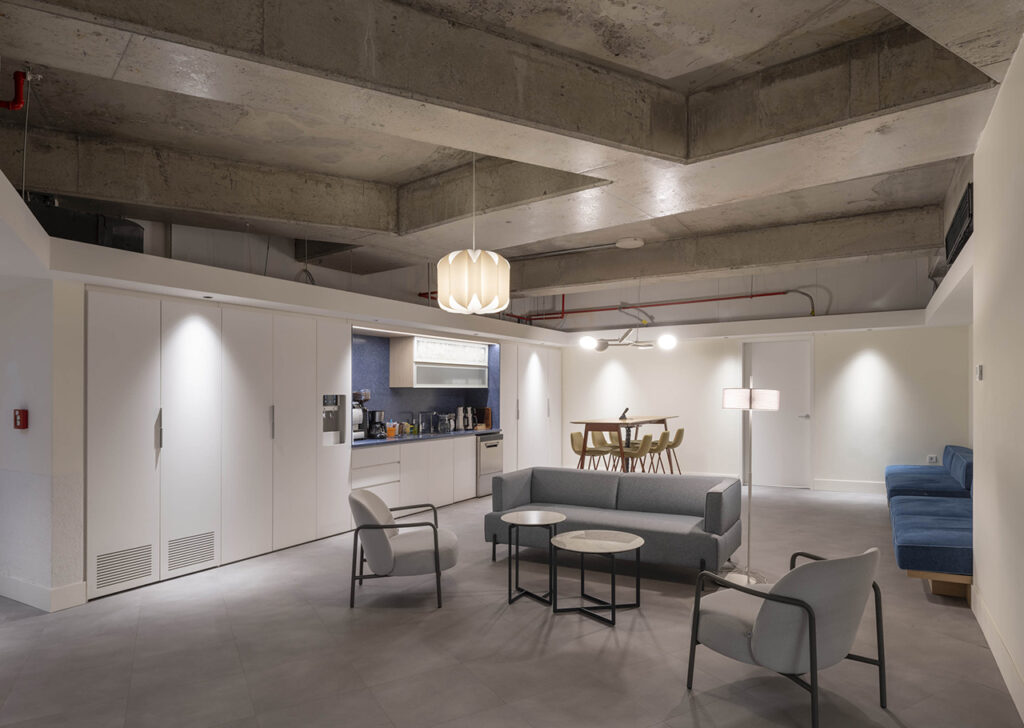
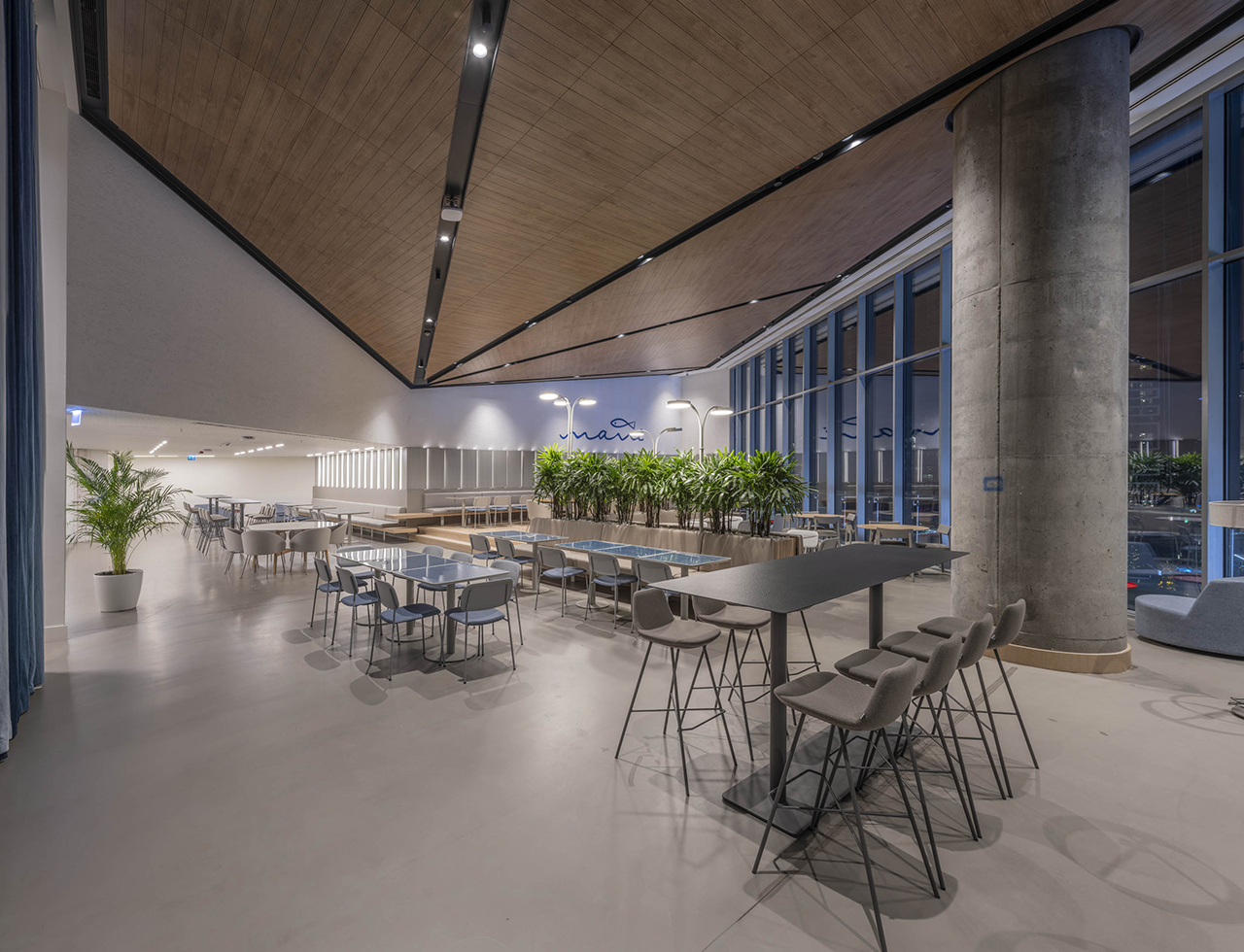
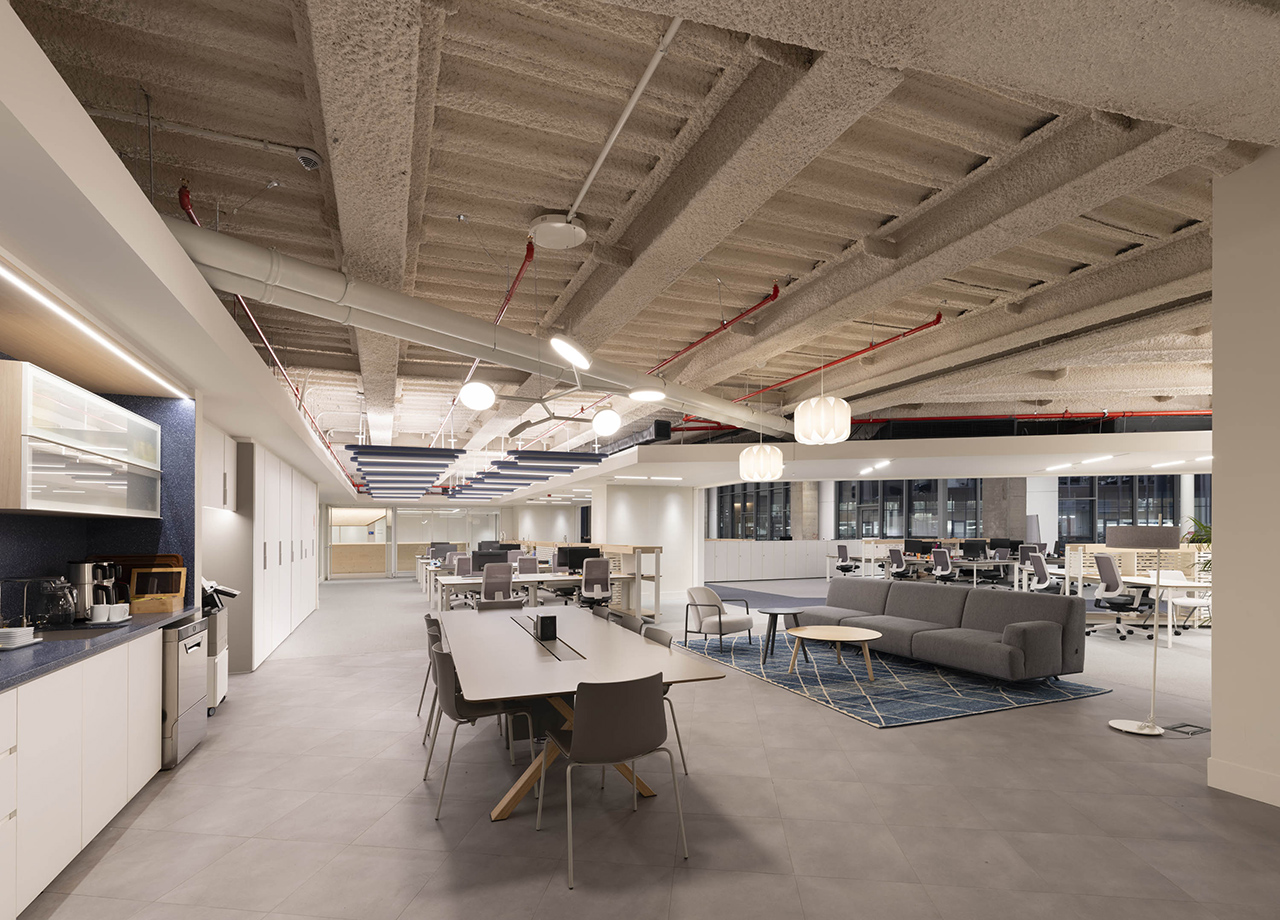
The project also aimed to strengthen internal communication and increase productivity by creating social spaces and alternative work areas that encourage collaboration. These spaces were distributed evenly throughout the floors. In addition to the social areas located near workstations, a dedicated café area was designed on the first floor. A sloped suspended ceiling was introduced to bring the ceiling height closer to a human scale, and together with carefully selected materials, it created a comfortable and welcoming atmosphere for users. Special social spaces such as the café and design hub were positioned to take advantage of the office’s best views.
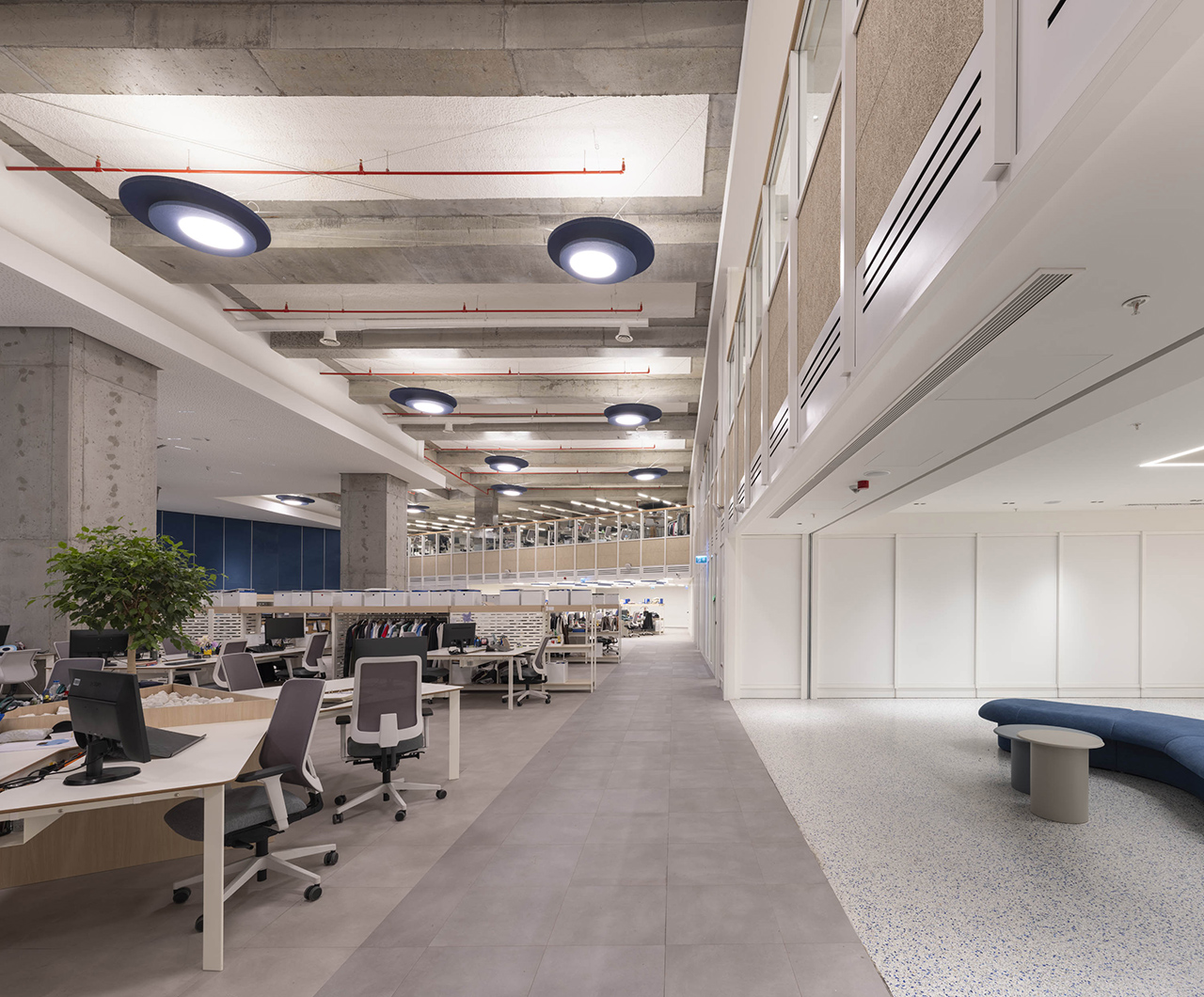
The office consists of main floors and mezzanine levels. The main floors feature ceiling heights of approximately seven meters. A custom interior façade design was developed to establish a visual relationship between the mezzanine and main floors. This approach created a unified design language throughout the space and added a strong three-dimensional character to the project. Heraklith panels were used on the interior façade—serving partly as parapets and partly as enclosures for private offices—to achieve an industrial aesthetic.
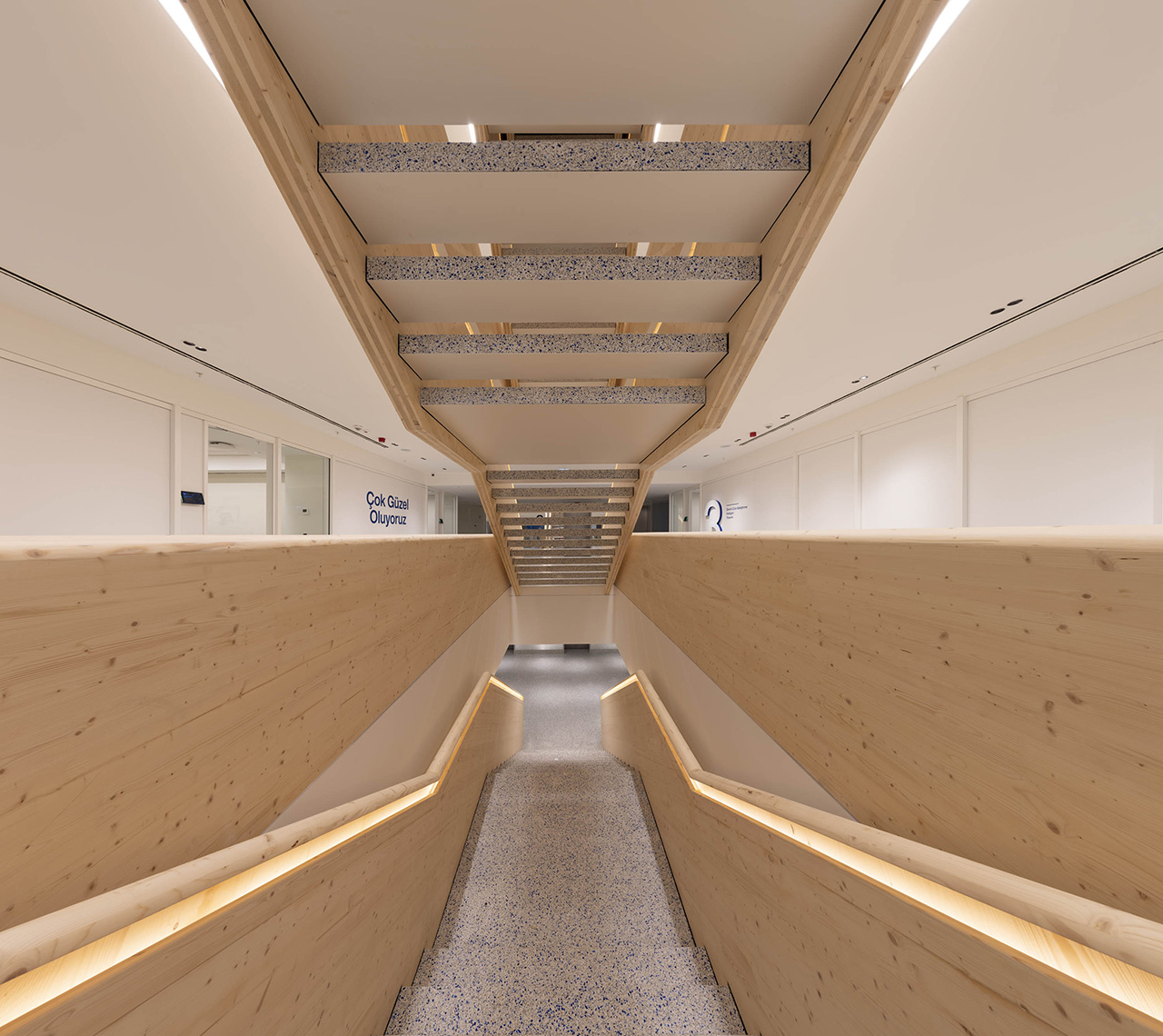
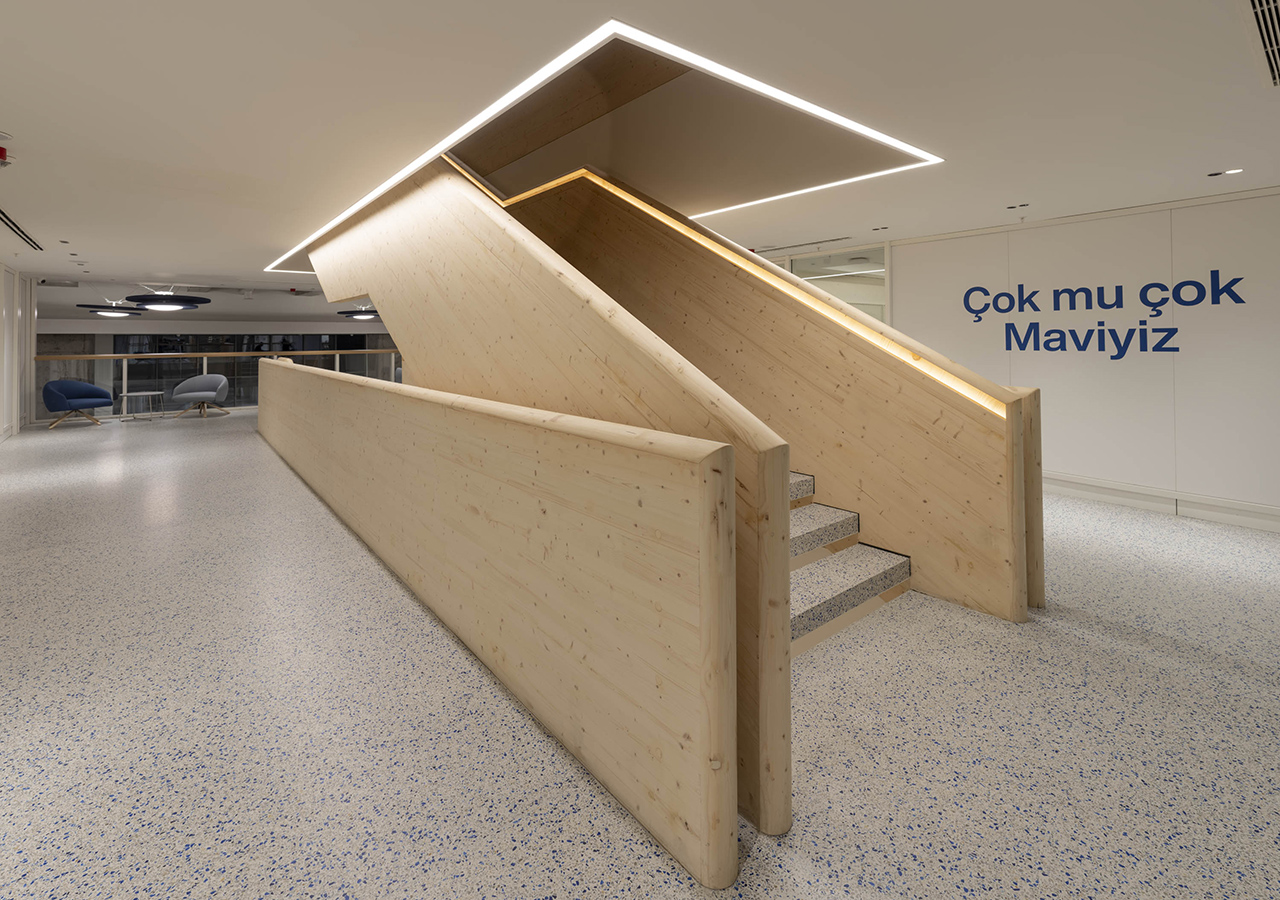
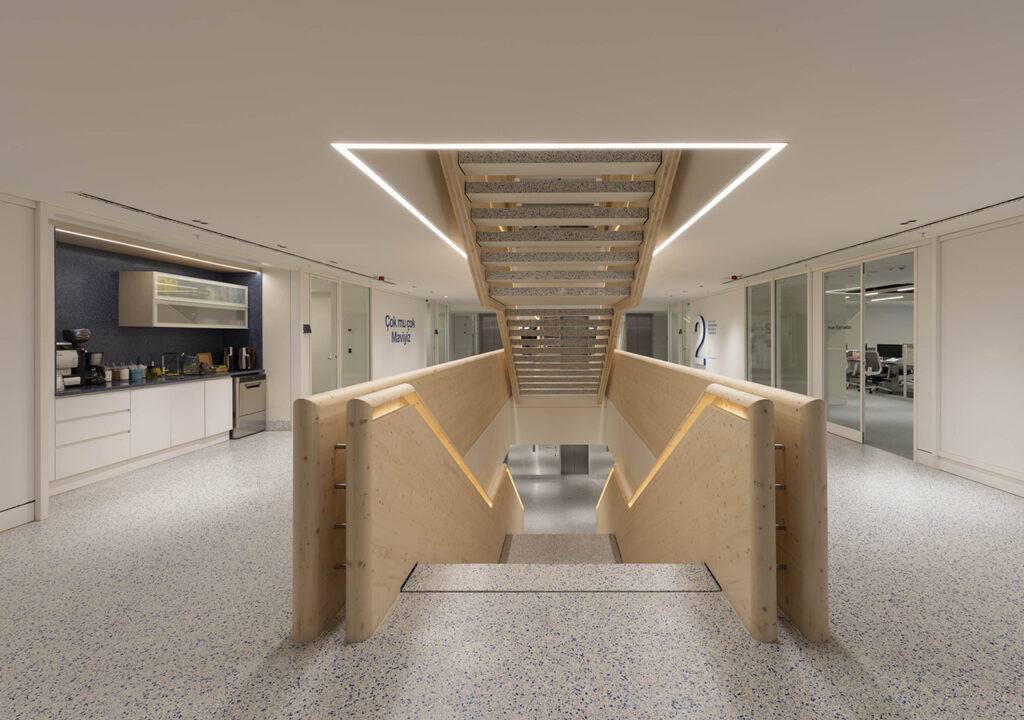
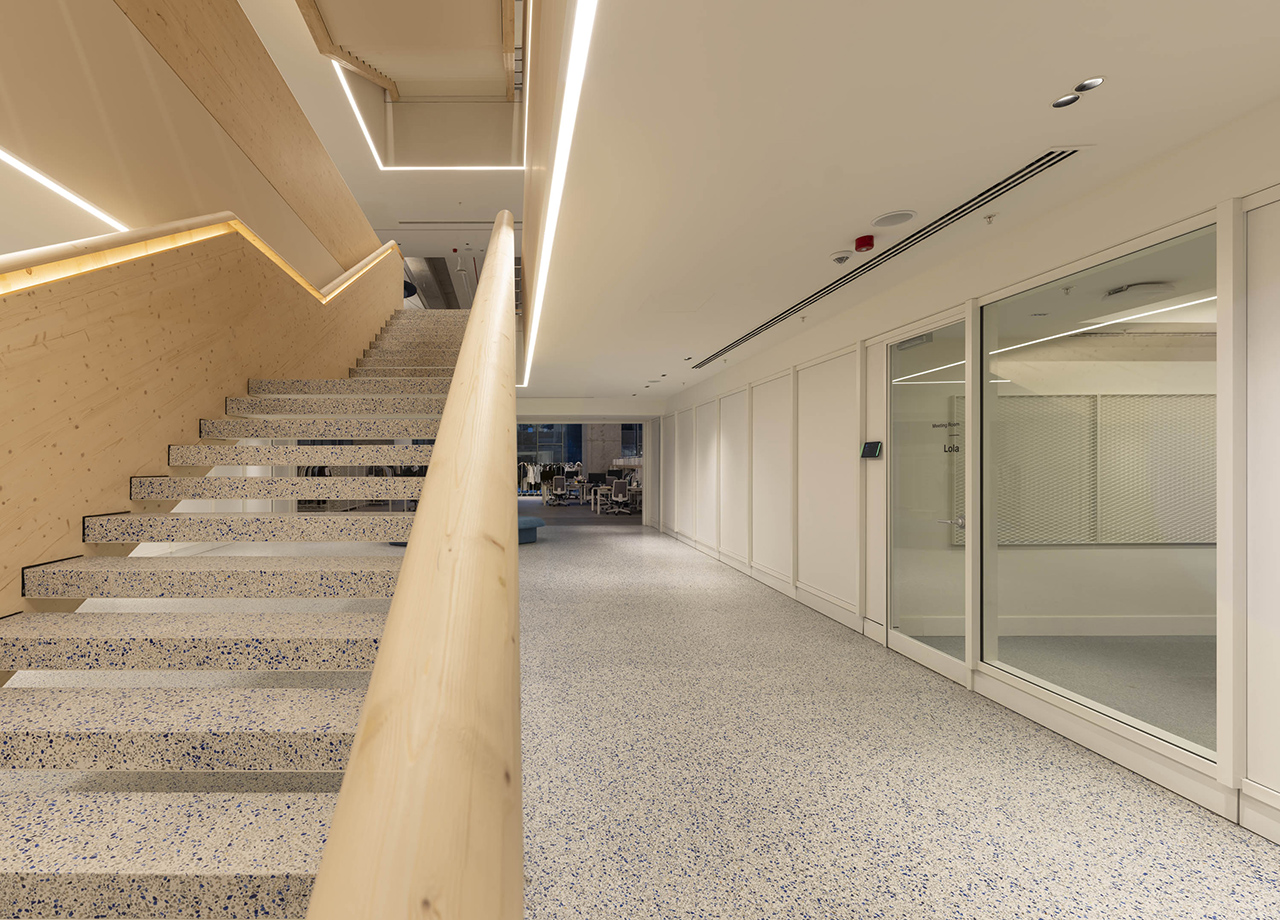
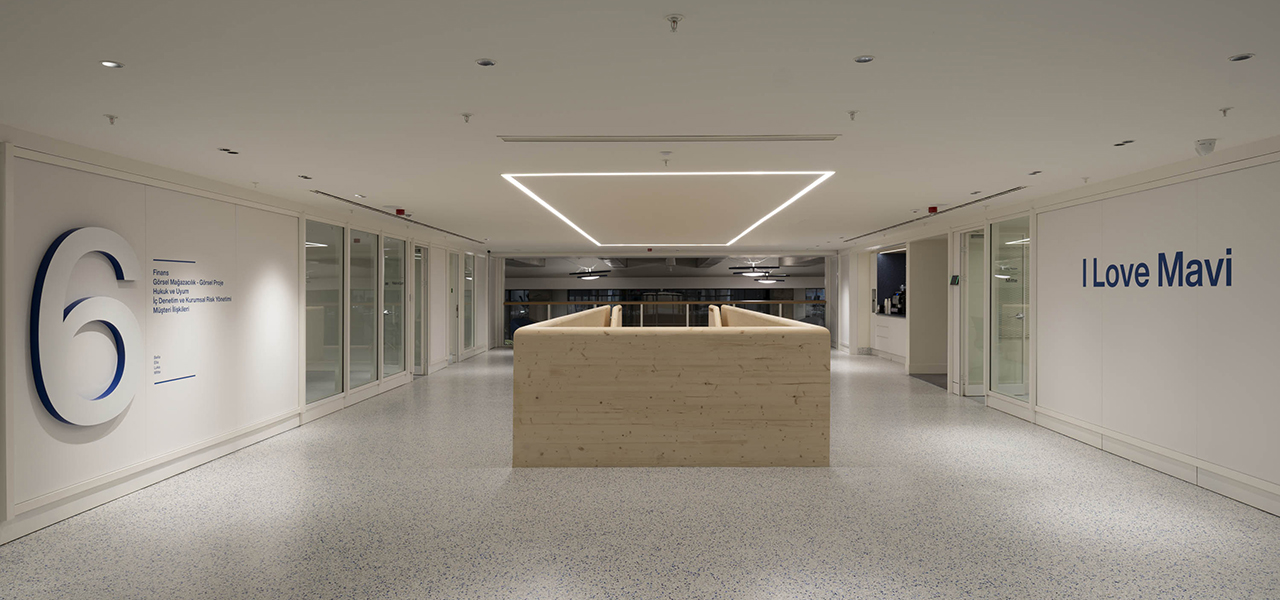
All floors were connected through a CLT (Cross-Laminated Timber) staircase located within the floor lobbies, with lighting details highlighting the staircase as a key architectural feature. In addition to the CLT staircase, steel staircases were incorporated throughout the space to facilitate circulation between the main floors and mezzanine levels.